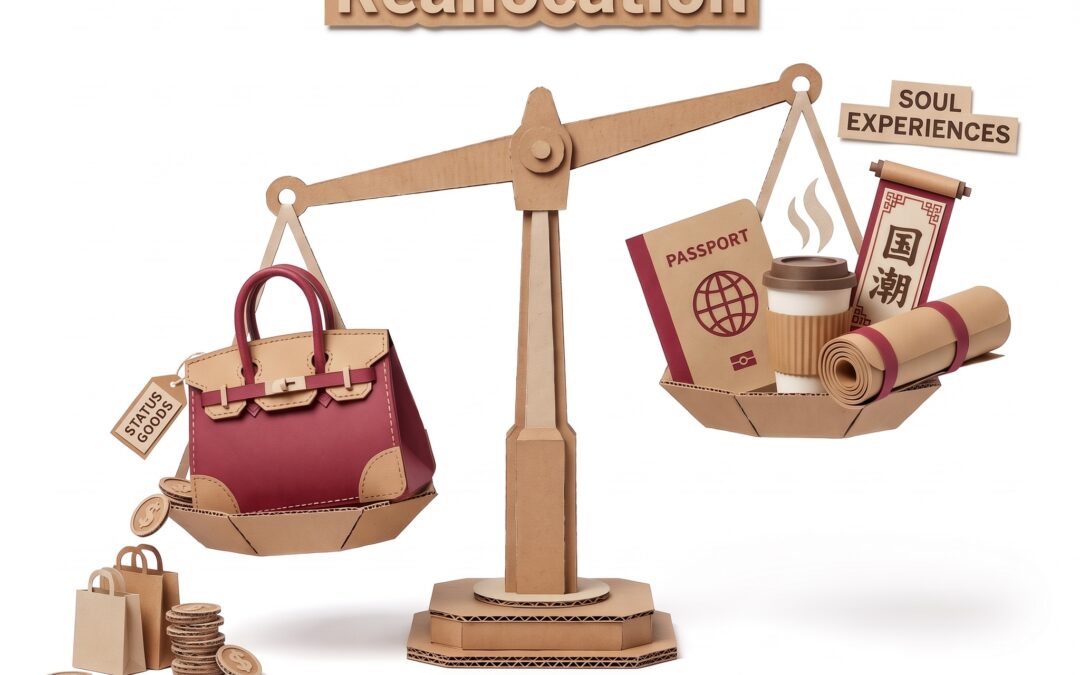
चीनी उपभोक्ता वस्तुओं पर कम खर्च कर रहे हैं, लेकिन यह कुल मिलाकर कम खर्च करने के समान नहीं है। 2026 का सबसे गलत समझा जाने वाला आर्थिक आख्यान तथाकथित उपभोग गिरावट है। ब्लूमबर्ग से लेकर वॉल स्ट्रीट जर्नल तक की सुर्खियों ने चीन के सपाट खुदरा वस्तुओं के आंकड़ों को इस बात के प्रमाण के रूप में प्रस्तुत किया है कि उपभोक्ता पीछे हट रहा है। लेकिन राष्ट्रीय सांख्यिकी ब्यूरो के आंकड़ों पर करीब से नज़र डालने से एक बहुत अलग कहानी सामने आती है: 2026 की पहली छमाही में उपभोक्ता वस्तुओं की कुल खुदरा बिक्री में साल-दर-साल मामूली 2.3 प्रतिशत की वृद्धि हुई, लेकिन इसी अवधि में सेवा खुदरा बिक्री में 7.6 प्रतिशत का उछाल आया [1]। यह अंतर ही कहानी है। उपभोक्ता कम खर्च नहीं कर रहे हैं - वे अलग तरह से खर्च कर रहे हैं। चीन में प्रवेश की योजना बना रहे विदेशी ब्रांडों के लिए, इस संकेत को सही ढंग से पढ़ना ही सही उत्पाद के साथ सही समय पर प्रवेश करने और बाजार को पूरी तरह से गलत समझने के बीच का अंतर है।.
पहला जाल वस्तुओं की खुदरा बिक्री को उपभोक्ता विश्वास के प्रॉक्सी के रूप में मानना है। 2026 के पहले छह महीनों में, एनबीएस के आंकड़ों से पता चलता है कि जून में अकेले वस्तुओं की खुदरा बिक्री में साल-दर-साल वास्तव में 0.8 प्रतिशत की गिरावट आई, जिसे व्यापक रूप से उपभोक्ता संकट के रूप में रिपोर्ट किया गया [2]। लेकिन उसी रिपोर्ट से पता चलता है कि खानपान राजस्व में 5.4 प्रतिशत की वृद्धि हुई, पर्यटन संबंधी खर्च में 11.2 प्रतिशत की वृद्धि हुई, और संस्कृति और मनोरंजन सेवाओं में 9.8 प्रतिशत का उछाल आया [1]। यह उपभोक्ता के पीछे हटने का मामला नहीं है। यह उपभोक्ता के पुनः आवंटन का मामला है। 2026 के मध्य से मैकिन्से चीन उपभोग अद्यतन में पाया गया कि 63 प्रतिशत चीनी उपभोक्ताओं ने कहा कि उन्होंने अगले 12 महीनों में अनुभवों पर खर्च बढ़ाने की योजना बनाई है, जबकि केवल 37 प्रतिशत ने भौतिक वस्तुओं पर खर्च बढ़ाने की योजना बनाई [3]। आंकड़े स्पष्ट हैं: वस्तुएं सेवाओं और अनुभवों के मुकाबले बटुए में अपना हिस्सा खो रही हैं।.
दूसरा जाल यह मान लेना है कि प्रीमियम खत्म हो गया है। जब चीनी उपभोक्ताओं ने लक्जरी हैंडबैग और आयातित सौंदर्य प्रसाधनों पर खर्च कम किया, तो कई विश्लेषकों ने चीन में प्रीमियम उपभोग के अंत की घोषणा कर दी। लेकिन वास्तविक आंकड़े कुछ अधिक सूक्ष्म दिखाते हैं। जिंग डेली 2026 जेन जेड रिपोर्ट में पाया गया कि चीनी जेन जेड उपभोक्ता चीन में लक्जरी खर्च का 70 प्रतिशत नियंत्रित करते हैं, लेकिन उनका खरीद तर्क मौलिक रूप से बदल गया है [4]। वे कम नहीं खरीद रहे हैं - वे अलग तरह से खरीद रहे हैं। पुराने फॉर्मूले 'इसे खरीदें क्योंकि यह स्थिति और धन का संकेत देता है' को बदल दिया गया है 'इसे खरीदें क्योंकि यह मेरी पहचान और मूल्यों को व्यक्त करता है'। ऑक्टोप्लस मीडिया की चीन उपभोग प्रवृत्तियों पर 2026 की एक श्वेत पत्रिका वर्ष की परिभाषित उपभोक्ता प्रेरणा के रूप में 'भावनात्मक मूल्य' शब्द का उपयोग करती है, यह देखते हुए कि उपभोक्ता उन उत्पादों के लिए प्रीमियम देने को तैयार हैं जो सांस्कृतिक अनुनाद, व्यक्तिगत अर्थ या सामुदायिक जुड़ाव प्रदान करते हैं, लेकिन उन उत्पादों के लिए आक्रामक रूप से मूल्य तुलना करते हैं जो केवल कार्यात्मक उपयोगिता प्रदान करते हैं [5]। 2026 के चीन में सफल होने वाला विदेशी ब्रांड वह नहीं है जिसके पास सबसे प्रतिष्ठित लोगो है, बल्कि वह है जिसके पास सबसे सम्मोहक कहानी है।.
यह बदलाव युवा चीनी उपभोक्ताओं के बीच गुओचाओ और घरेलू ब्रांड वरीयता के उदय में सबसे अधिक दिखाई देता है। गुओचाओ प्रवृत्ति - घरेलू ब्रांडों की राष्ट्रवादी खपत - तीन पीढ़ियों से गुज़री है और अब अपने सबसे परिपक्व चरण में है। 2018 में यह देशभक्ति के कारण घरेलू खरीदने के बारे में था। 2024 तक यह घरेलू खरीदने के बारे में था क्योंकि घरेलू ब्रांडों की गुणवत्ता वास्तव में बेहतर थी। 2026 में यह घरेलू खरीदने के बारे में है क्योंकि घरेलू ब्रांड किसी भी विदेशी प्रतियोगी की तुलना में चीनी सांस्कृतिक संदर्भ को बेहतर ढंग से समझते हैं [6]। चाइना डेली की रिपोर्ट है कि 2026 की शुरुआत में परिधान में घरेलू ब्रांडों की बाजार हिस्सेदारी 78 प्रतिशत तक पहुंच गई, जो 2019 में 52 प्रतिशत थी [7]। अकेले हानफू 20 अरब आरएमबी के बाजार में विकसित हो गया है, जिसमें 60 प्रतिशत साल-दर-साल वृद्धि हुई है, जो पूरी तरह से जेन जेड उपभोक्ताओं द्वारा संचालित है जो पारंपरिक चीनी कपड़ों को फैशन और सांस्कृतिक अभिव्यक्ति दोनों के रूप में देखते हैं [8]। इस माहौल में जीतने वाले विदेशी ब्रांड वे नहीं हैं जो गुओचाओ से अपनी शर्तों पर प्रतिस्पर्धा करने की कोशिश कर रहे हैं, बल्कि वे हैं जिन्होंने एक विशिष्ट सांस्कृतिक स्थान पाया है जहां उनकी विदेशी उत्पत्ति एक दायित्व के बजाय एक संपत्ति है।.
अनुभव अर्थव्यवस्था के आंकड़े और भी चौंकाने वाले हैं। ओलिवर वायमैन के 2026 चीन यात्री सर्वेक्षण में पाया गया कि 2026 में चीनी आउटबाउंड पर्यटन खर्च $280 बिलियन तक पहुंचने का अनुमान है, जो पहली बार कोविड-पूर्व स्तरों को पार कर गया है [9]। मई दिवस 2026 में चीन में 320 मिलियन घरेलू पर्यटक यात्राएं देखी गईं, जो साल-दर-साल 18 प्रतिशत अधिक है, प्रति यात्रा खर्च में 12 प्रतिशत की वृद्धि हुई [10]। यह पीछे हटने वाले उपभोक्ता का व्यवहार नहीं है। वस्तुओं की श्रेणी में जो गिरावट दिखती है, वह वास्तव में अनुभवों की श्रेणी में उन्नयन है। चीनी उपभोक्ता एक तर्कसंगत व्यापार कर रहे हैं: वे कम चीज़ें खरीदते हैं ताकि वे बेहतर यात्राएं, बेहतर भोजन और बेहतर यादें वहन कर सकें। यात्रा सेवाओं, आतिथ्य, प्रीमियम भोजन और अनुभव-आधारित खुदरा जैसी श्रेणियों में विदेशी ब्रांडों के लिए, चीन का अवसर कभी बड़ा नहीं रहा।.
उपभोक्ता वस्तुओं के ब्रांडों के लिए निहितार्थ अधिक जटिल हैं। कार्यात्मक श्रेणियां सबसे अधिक दबाव में हैं। मैकिन्से के आंकड़ों से पता चलता है कि उन श्रेणियों में जहां चीनी उपभोक्ता घरेलू और विदेशी ब्रांडों के बीच बहुत कम अंतर देखते हैं, जैसे कि व्यक्तिगत देखभाल और पैकेज्ड भोजन, विदेशी ब्रांड प्रीमियम 2020 में 30-40 प्रतिशत से गिरकर 2026 में 10 प्रतिशत से नीचे आ गया है [3]। लेकिन उन श्रेणियों में जहां विदेशी उत्पत्ति वास्तविक विशेषज्ञता या विरासत का संकेत देती है, प्रीमियम बना रहता है। टीमॉल पर इतालवी कॉफी ब्रांड घरेलू विकल्पों की तुलना में 2-3 गुना अधिक मूल्य पर बिकते रहते हैं क्योंकि चीनी उपभोक्ता इतालवी कॉफी को प्रामाणिकता और शिल्प कौशल से जोड़ते हैं [11]। फ्रांसीसी त्वचा देखभाल ब्रांड मूल्य निर्धारण शक्ति बनाए रखते हैं क्योंकि फ्रांसीसी सौंदर्य विशेषज्ञता एक श्रेणी-विशिष्ट संपत्ति है जिसे घरेलू ब्रांडों ने पूरी तरह से दोहराया नहीं है। नियम स्पष्ट है: सामान्य विदेशीपन का कोई मूल्य नहीं है, लेकिन विशिष्ट विदेशी विशेषज्ञता अभी भी प्रीमियम प्राप्त करती है।.
एक महत्वपूर्ण डेटा बिंदु जो अधिकांश बाजार विश्लेषण से छूट जाता है, वह है इस पुनः आवंटन प्रवृत्ति के भीतर पीढ़ीगत विभाजन। बैन एंड कंपनी 2026 चीन लक्जरी रिपोर्ट में पाया गया कि 2026 की पहली छमाही में कुल लक्जरी खर्च में 8 प्रतिशत की गिरावट आई, जबकि बढ़िया भोजन, लक्जरी यात्रा और प्रीमियम कल्याण जैसी अनुभवात्मक लक्जरी श्रेणियों पर खर्च वास्तव में 12 प्रतिशत बढ़ा [12]। गिरावट पूरी तरह से कठोर लक्जरी वस्तुओं में केंद्रित है। चीनी जेन जेड उपभोक्ता लक्जरी पर खर्च करने से इनकार नहीं कर रहे हैं - वे पुनर्परिभाषित कर रहे हैं कि लक्जरी का क्या अर्थ है। $5,000 का हैंडबैक अपनी अपील खो रहा है। $5,000 का निजी भोजन अनुभव अपील प्राप्त कर रहा है। यह खर्च महत्वाकांक्षा में गिरावट नहीं है। यह खर्च प्राथमिकताओं में बदलाव है जो एक ऐसी पीढ़ी द्वारा संचालित है जो भौतिक प्रचुरता के साथ बड़ी हुई है और अब स्वामित्व से अधिक अर्थ की लालसा रखती है।.
जून 2026 के एनबीएस आंकड़े पुनः आवंटन पैटर्न के भीतर एक स्पष्ट शहरी-ग्रामीण विभाजन भी प्रकट करते हैं। टियर 1 शहर के उपभोक्ताओं ने वस्तुओं से सेवाओं की ओर सबसे तीव्र बदलाव दिखाया, शंघाई और बीजिंग में खुदरा वस्तुओं के खर्च में 3.2 प्रतिशत की गिरावट.
The regulatory environment is also reshaping consumption patterns in ways that foreign brands need to understand. The new Personal Information Protection Law enforcement actions in 2026 have made Chinese consumers more cautious about sharing data with brands, particularly foreign brands that transfer data across borders [14]. This has created a trust advantage for domestic brands in digital-native categories. A KPMG survey from mid-2026 found that 57 percent of Chinese consumers said they trusted domestic brands more than foreign brands to protect their personal data, up from 41 percent in 2024 [15]. This trust gap is now a measurable factor in purchase decisions, particularly for Gen Z consumers who are more privacy-conscious than older cohorts.
A useful case study is the performance of international coffee brands in China. Italian brand Lavazza and Swedish brand Tim Hortons have both expanded aggressively in China, but with different strategies and results. Lavazza entered through a joint venture and positioned itself as an authentic Italian coffee experience, opening flagship stores that function as cultural immersion spaces rather than just coffee shops. Chinese consumers pay 50 RMB for a Lavazza latte compared to 30 RMB for a domestic competitor, and the brand reports same-store sales growth of 23 percent in 2026 [16]. The premium is justified not by the brand name alone but by the curated Italian experience that surrounds it. This is the emotional value framework in action: the consumer pays more because the experience delivers something the domestic alternative cannot replicate.
The counterexample is instructive. Several mid-tier international fashion brands have struggled in China because they occupy the generic foreign space. Brands like Esprit and Superdry that once had strong China presence have seen their relevance decline precisely because they offered a generic international lifestyle image that Chinese domestic brands can now replicate with better cultural resonance. The brands losing in China are the ones that were never truly premium — they were simply foreign. Once that foreignness lost its novelty value, the brands had nothing else to offer [17]. The distinction between brands with genuine category-specific expertise and brands that relied on generic foreign cachet is the single most important factor separating winners from losers in 2026 China.
The most successful foreign brands in China today share a common pattern: they are relentlessly specific about what they stand for and what they do not do. Lululemon does not try to compete with domestic sportswear brands across the entire athletic category; it dominates a narrow premium niche where its community-building model and technical fabric innovation create a moat that Chinese competitors cannot easily cross. Similarly, Nespresso does not compete in the broad coffee market against domestic chains; it occupies a luxury at-home coffee segment where sustainability and design credentials matter more than price [18]. The specificity of positioning is the strategic variable that determines whether a foreign brand commands a premium or gets squeezed into irrelevance. Foreign brands that succeed in 2026 China are those that answer a deceptively simple question with genuine depth: why does a Chinese consumer need a foreign version of this product? If the answer is not immediately obvious and defensible, the brand is operating without a moat.
The practical takeaway for foreign brands looking at China in 2026 is that the market has not shrunk — it has become more demanding. The consumer who is willing to pay a premium for a foreign brand now requires that brand to earn that premium through genuine differentiation. The era of the China premium for simply being foreign is over. But the era of the China premium for being authentically excellent in a specific domain is alive and well.
Foreign brands evaluating China entry should ask themselves five questions before committing resources. First, does my category have genuine differentiation that Chinese domestic brands cannot easily replicate? Categories where foreign brands hold structural advantages such as complex manufacturing IP, heritage-based brand equity, or regulatory barriers to domestic competition are the ones that will sustain premium pricing. Second, can my brand tell a story that resonates emotionally with Chinese consumers, not just status signaling? Third, do I have a credible data privacy and local operations story that builds trust rather than triggers suspicion? Fourth, can I compete in the experience layer of the category, not just the product layer? Fifth, is my pricing strategy built for a consumer who compares emotional value against price rather than status signaling against price?
The brands that will win in 2026 China are not the ones with the most famous global brand. They are the ones that understand that the Chinese consumer is not downgrading — they are upgrading their standards for what deserves their money. The opportunity for foreign brands is not in competing on price with Chinese domestic competitors. It is in being so excellent in a specific domain that the consumer feels the purchase is not a luxury but a necessity for the life they want to live.